
Half a million people marched in London on Saturday opposed to the marketisation and privatisation of public services. Young people by the droves marched to save their youth centres and projects. Meanwhile an Inquiry into Youth Services continues, seemingly impervious to this popular expression of disagreement and dismay. Being a sad soul I’ve been following its predictable course with half a mind to write something at its end. And, in a moment of exquisite irony, this week’s hearing will welcome as a witness the self-styled Third Sector maverick, Adam Nichols, the Chief Executive of Changemakers, along with a posse of other social entrepreneurs and philanthropo-capitalists.
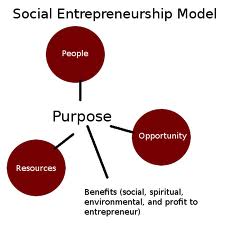
At first glance Adam Nichol’s talk of youth-led provision and youth-controlled budgets sounds the right notes. But cacophony awaits. His composition is wearily predictable in its invocation of the failed categories of neo-liberalism. Changemakers’ programmes view young people as either leaders, tellingly referred to as commissioners, the next generation of social entrepreneurs. Or it reduces them via the ‘personalisation’ agenda to consumers. Informal education becomes a commodity, its content determined by the market. So too its programmes are obsessed with the need for a social mix, hence the embrace of National Citizen’s Service, within which ‘lumpen’ young people will be civilised by contact with their contemporary ‘betters’.
However the most striking thing about Nichols’ outlook is his visceral contempt for local authorities in general, youth services in particular and professional youth workers at large. He exaggerates, but suggests that youth services have been backward in resisting ‘commissioning’. A voluntary sector executive is quoted as saying the youth sector is “twenty years behind” health and social care in this regard. Whilst masquerading as the voluntary sector, Nichols wants to get his ‘private’ hands on so-called statutory budgets, because he can deliver at less cost and because his organisation’s ability to innovate and respond to the needs of our stakeholders cannot be matched by public sector agencies. Local authorities are to be reduced to being no more than ‘honest brokers’, helping young people and their families to navigate the market. Meanwhile, as an intermediary organisation, Changemakers will run capacity-building training for all the would-be, not quite ready providers of services for young people.
Now I am keen to debate the issue of ‘professionalisation’ in youth and community work, but Nichols simply dismisses a half century of training and practice focused on enhancing the skills and knowledge needed to work critically and creatively with young people. He forgets conveniently the world-wide shift to a ‘professionalising’ of youth work, which at the same time desires to be open and accessible. He ignores the fact that a large number of youth workers entered the profession via volunteering in their local communities and as mature students, wanting to understand better what they were doing. Nichols has no time for workforce development. Thus he argues, a very substantial amount of money and resources has been invested in this area over recent years. The agenda assumes that ‘professionalisation’ of the youth workforce is an important and desirable outcome. Our view is that ‘professional’ youth work is an essentially protectionist concept, peddled largely by sector bodies and the youth work unions, which ignores the fact that 95% of youth provision is provided by volunteers. Changemakers does not believe that a professional qualification is necessary to be effective in working with young people. Indeed many of the best ‘youth workers’ we know would not describe themselves as such. This includes most of our own workforce.
Given this perspective it is intriguing to note that his appearance at the Inquiry is in the session dedicated to examining ‘the composition and effectiveness of the young people’s workforce, including the recruitment, training and qualification framework for youth workers and other staff working with young people, including volunteers.’ Given that a certain Doug Nicholls, a staunch defender of professional youth work is on the same panel, we might get a lively affair. It would make a change!
 IN DEFENCE OF YOUTH WORK