
Amidst the present social and political turmoil young people are leading actors and actresses. In their review of Guy Standing’s The Precariat, Martin Allen and Patrick Ainley explore the emergence of a youthful precariat.

They open by noting that Standing ‘seeks to explain the implications of globalisation for occupational class structures. Rather than remaining within the ranks of Marx’s proletariat; increasingly large numbers of people have now been pushed into a new and insecure ‘precariat’ – lacking adequate incomes and ‘security’ in the workplace, they are also without a ‘secure work-based identity’ (p9). Drawn from different sections of society, not simply Marx’s ‘lumpen proletariat’ or the unemployed; members of the precariat do not feel part of the organised labour movement and on the contrary, are just as likely to be hostile to the ‘privileges’ enjoyed by labourism’s ‘core’.
Standing considers that young people not only represent the core of the emerging precariat but also that youth ‘will have to take the lead in forming a viable future for it’ (p66) The disappearance of what have been described as ‘youth jobs’ (Ainley and Allen 2010) is most visibly expressed in unemployment statistic -20% for the UK, but 40% for Spain. It is also the case as Standing recognises, that many more young people, particularly those highly qualified are ‘underemployed’ –and that there is a serious mismatch between the promises transmitted to young people through the education system and the stark realities of the labour market. (Ainley and Allen, 2010; Brown, Lauder and Ashton, 2011)
Rather than being a creator of human capital ‘an education sold as an investment good that has no economic return for most buyers is, quite simply a fraud’(67). Young people face their own ‘precarity trap’ – emerging from college and unable to obtain the jobs consistent with their level of qualifications they are forced to take temporary employment. This does not even start to pay off the debts they have acquired through prolonging their full-time education, yet the longer they stay in this type of employment, the less chance they have of escaping from this ‘losing track’ (74). The introduction of internships only provides opportunities for the select few.
As Standing recognises, youth must be central to any new politics. In the UK, students have returned to the streets for the first time in 40 years, while in Greece and now Spain, young people have headed more protracted protests against unemployment and austerity. A new ‘politics’ of education must also be an important part of this process. Standing argues that the commodification of education must be combated and the ‘dumbing down’ of its content reversed. More generally, learning has the opportunity to be ‘rescued’ as an activity ‘for its own sake.’ (159) and higher education reconstituted as a ‘leisure’ rather a ‘commercial’ activity. This must not be assumed to imply a return to the elitist ‘liberal humanism’ of the past however (Allen and Ainley, 2007) A new class in the making also needs a new education in the making.
Standing’s arguments about the ‘unattractiveness’ of labour movement organisations and culture to those who make up the precariat, particularly those young people who ‘see unions as protecting privileges of older employees they cannot anticipate for themselves’ should be taken seriously. Nowhere more so than in the current campaign to protect teachers pensions. To prevent their members being perceived as a 21st century labour aristocracy; teacher union demands for ‘students and parents to get involved to defend education’ for example, must be linked to campaigns against tuition fees, the abolition of EMAs; as well as to more concrete proposals for how education can be reformed in the interests of the dispossessed.
Read their review in full at RADICALED
In a parallel piece Roy Ratcliffe starts from an acknowledgement of the creative role of young people in the Arab Spring.
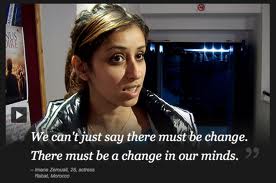
He begins:
It has been well documented, that the large-scale struggles in the middle-east and North Africa, were actually initiated by a new generation of young people. It is clear that in the struggles that followed within Europe the younger generation also played, and continue to play, a leading role. However, this development poses an important question. Do the activist youth of the Arab Spring and those in what promises to be the European Summer or autumn, represent more than just themselves? We know roughly what they want; jobs, decent standards of living and freedom of expression. We know they are internet savvy, disenchanted with formal politics and promote their own and others self-activity across and beyond national boundaries. But what possible sector of modern society do they really represent? They are clearly not a traditional, blue-collar workforce, nor do they represent an emerging middle-class of future small shopkeepers, entrepreneurs or professional civil servants. The reason is obvious. It is a fact that the scale of commodity distribution and sale has followed that of commodity production. Large supermarket orientated industries have squeezed out the small distributors of goods and increasingly of services. The whole global system has reached a stage of technological maturity which requires an educated workforce to enable its industry, commerce and state institutions to function and develop. As a consequence of this requirement, considerable past effort was directed into the provision of University and Polytechnic education and the stages necessary to gain entry to these establishments of higher and further education. Therefore the educated youth of the 21st century are a distinctive product of the advanced, and now crisis-ridden stage of capitalist development.
Later he continues:
The youth activists of today are a generation of working people who should have everything they need to be fully human. They are eminently capable and worthy of being active members of a collective working community and participating in its decision-making processes, yet are being denied both these essential aspects of human life. Due to the class structure and crisis nature of the present system they have less than a minimum necessary to fulfil their potential. This contradiction, between what should be their inheritance and what they are actually granted by the system, occurs precisely at a time when there are obvious – often glaring – levels of unprecedented wealth. It is undoubtedly the case that the young activists in the middle-east, North Africa and Europe, have been educated and trained according to the previously estimated needs of the current system, but now find through no fault of their own, they are surplus to requirements. And so according to the logic of capitalist economics, like any other commodity whose value cannot be realised, they are to be discounted or discarded completely. The same process, of technological advancement, which displaced many 20th century skilled blue-collar workers and left them to their own devices, has now had the same effect upon the skilled white-collar workers of the 21st. The present system of production and distribution for profit means that any workers whose skills cannot be used profitably are always surplus to requirements, no matter how well educated or skilled they are. But whilst non-human commodities when no longer valuable stay where they are dumped and subsequently crumble and perish, human beings are not always so passive.
Read in full at the new critical-mass blog
 IN DEFENCE OF YOUTH WORK